
by Alison Cross a.cross@theday.com
Originally published in The Day on May 18, 2026
Link to article
Waterford — After lobbying for policies to end child poverty, the Community Foundation of Eastern Connecticut met with state lawmakers and nonprofit leaders Monday to reflect on wins and shortfalls from the 2026 legislative session.
The End Child Poverty Now coalition entered the 2026 session to establish a child tax credit, universal school meals, just-cause eviction protections and a state-funded food assistance program.
By the time the session closed on May 6, just one of those goals — universal meals — had been partially realized with the addition of $12 million to the state budget for free school breakfast.
In addition to this win, CFECT President and CEO Maryam Elahi said the coalition succeeded in ensuring that the state will deliver on its pledge to appropriate $300 million to the Early Childhood Education Endowment to support free and low-cost childcare.
While acknowledging these gains for the coalition, Elahi stressed the importance of identifying “where we could do better and where we want to deliver for our community in the coming year.”
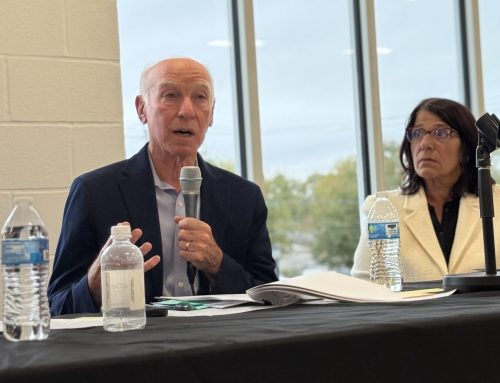
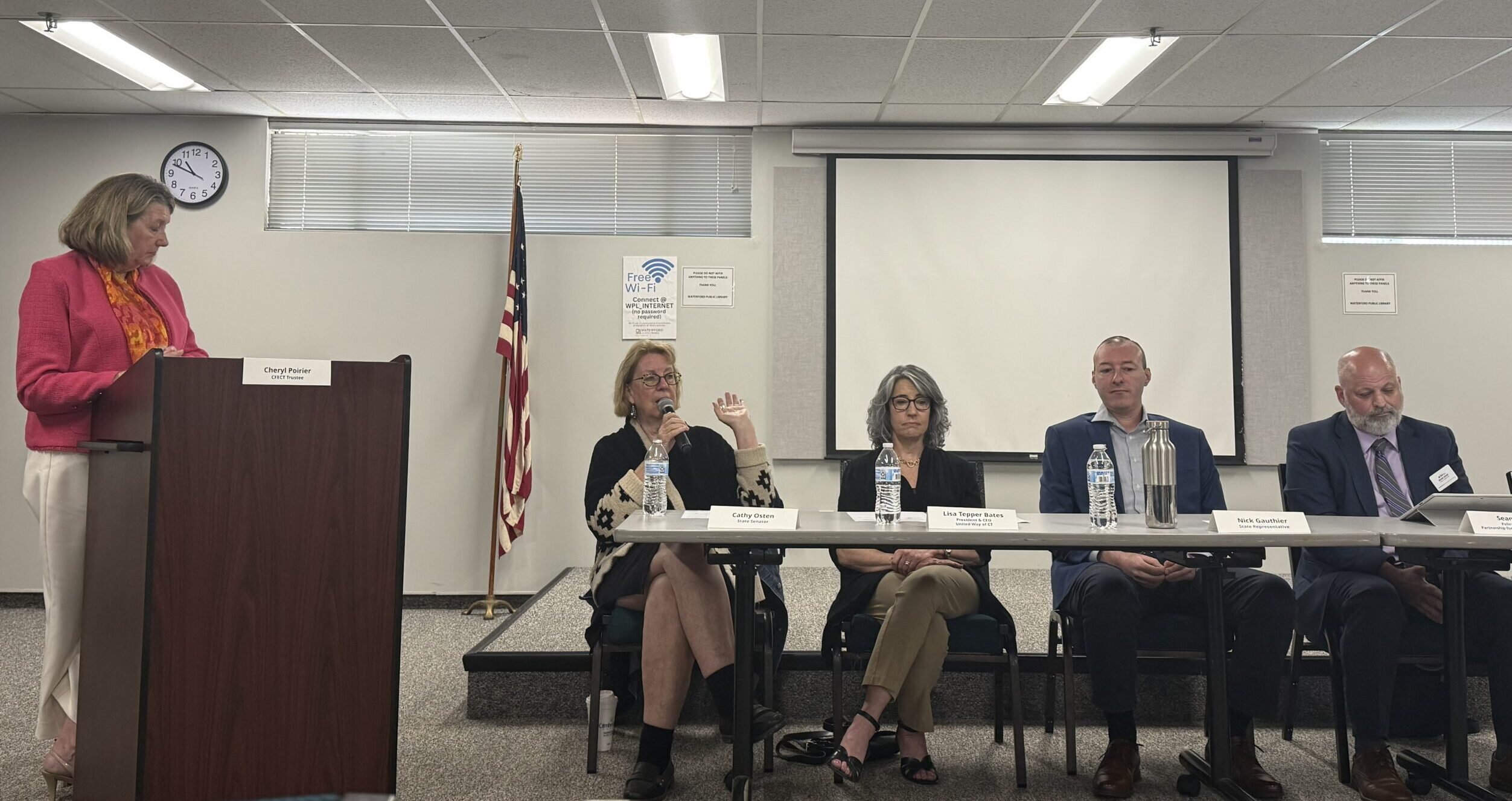
Monday’s legislative debriefing at the Waterford Public Library brought together State Sen. Cathy Osten (D-19 District), Rep. Nick Gauthier (D-38th District), United Way of Connecticut CEO Lisa Tepper Bates, Partnership for Strong Communities Policy Director Sean Ghio and Office of Early Childhood Deputy Commissioner David Morgan to discuss what went right, what went wrong and how the End Child Poverty Now coalition can move forward.
Universal School Meals
Securing state funding for free breakfast, lunch and afternoon snack for all Connecticut students was a top priority for the coalition.
Just over 44% of public school students in the state qualify for free and reduced-price school meals through the National School Lunch Program.
Newly passed legislation will ensure that all students will receive free breakfast at school. Additionally, students who previously qualified for reduced-price meals will now receive lunch for free.
Gauthier said Connecticut only needs to look to Massachusetts to see that a sustainable funding model for free school breakfast and lunch exists.
“They fund universal school meals — breakfast and lunch — through a 4% surtax on incomes after $1 million a year,” Gauthier said. “That’s very obviously sustainable, but I think that’s also completely fair when you have people in that wealth and tax bracket getting their taxes cut by over $1 trillion at the federal level.”
“If the federal government is going to give tax breaks to the already ultra-rich and wealthy, then it is our responsibility as the state to make up for that funding loss and to fund excellent things like universal school meals and an afternoon snack,” Gauthier added.
Child Tax Credit
This legislative session, the coalition failed to secure up to $350 million in funding to provide taxpayers with a tax credit of $600 per child, with a maximum benefit of $1,800 per household.
Tepper Bates said the tax credit would offer much-needed relief to families who make up the 40% of households that are struggling to make ends meet.
“The challenge for families is having enough income to cover the necessities,” Tepper Bates said. “A really good and direct path to help them is to give them a child tax credit, which puts that money into their wallet, so they can cover what they do need to cover.”
“Studies show that when families get this additional money, they spend it on the things that their children need,” Tepper Bates added. “We’re going to come back, and we’re going to keep making this case, because this is the path forward. Most American states have recognized that families with children need some type of break if they are gonna have a state-level income tax, and we will keep fighting the fight.”
Just Cause Evictions
In Connecticut, once a lease expires, landlords can refuse to renew the rental agreement and evict tenants without cause. The only renters who are protected from these “no-fault” evictions are seniors over the age of 62 and renters who have a physical or mental disability.
Legislative efforts to expand these protections to all renters died this session without a vote in either chamber.
Ghio said the coalition is still working out its strategy to get the bill across the finish line next year.
“It is still a very important bill. We know income gains have not kept pace with rent growth for decades and it’s only gotten worse since the pandemic,” Ghio said. “There’s more and more pressure in the rental market, more opportunity for certain landlords to be bad actors, and that’s a small number of the landlords, but those are the ones that just cause eviction protection is necessary for.”
Food Assistance
The coalition sought to establish a state-funded food assistance program to restore benefits to households that lost eligibility for the federal Supplemental Nutrition Assistance Program — known as food stamps — due to new work requirements under President Donald Trump’s administration.
Osten said she supported a plan to provide up to $50 million to establish a bridge program that would provide food assistance as well as job coaching and training to people who lost the benefit. If participants could not secure employment, Osten said the program would show the federal government that these residents should receive SNAP benefits.
“We have to fight back the federal government’s impression of people all living on the dole when they could actually work, … but I think we have to fight them with data,” Osten said. “I want to put the dollars in that will ultimately get us a way to get those federal dollars back.”
Looking forward
The panelists also spoke about the need to expand access to transportation, utilities and low-cost energy infrastructure and boost funding for education.
Next legislative session, Gauthier stressed that the state must “decide where the tax burden is going to lie.”
“Are we going to continue to put it very unfairly on regressive local property taxes, or are we going to make sure that those at the very top are paying their fair share so that the rest of us can have well-funded public schools and municipal services?” Gauthier said.
After launching the End Child Poverty Now campaign three years ago, Elahi said coalition leaders believe that the state is eight to 10 years away from eliminating child poverty.
Tepper Bates said that she believes Connecticut is “one of the few states that can actually afford to” eliminate poverty —“if we decide that’s what we want to prioritize.”
“We should be talking about our community — not who’s poor (and) who’s not poor,” Tepper Bates said. “I’m afraid too many people think, ‘Well, that’s not my problem. I’ve got food on the table. I’ve got gas in my car.’ … But we’re all woven together, and we have to think that way, and we have to set policy that way.”