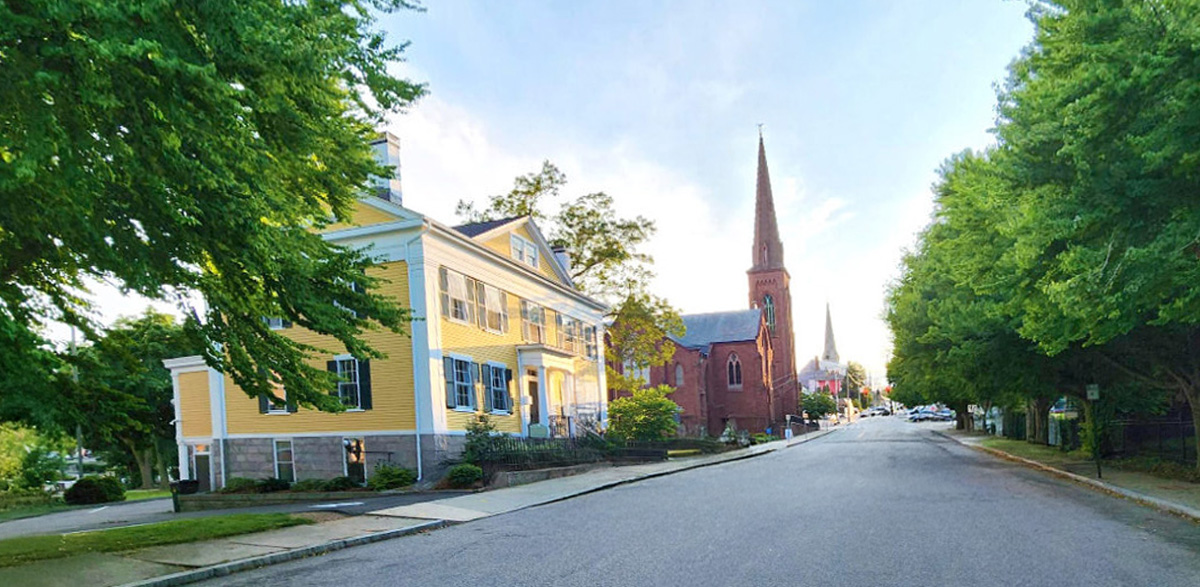

Tucked into the scenic northeast corner of Connecticut, where country roads wind through historic former mill towns, you’ll find the Thompson Ecumenical Empowerment Group (TEEG).
While the agency is a touchstone for residents to get early child care, food staples, and other essential services, TEEG is also an oasis for young people seeking connection.
Some stop in to meet with TEEG’s mentors, volunteer in its community garden, or stock shelves in the food pantry. Others may get a ride from TEEG’s youth advocates to the drama club at the theater in the next town, to the YMCA, or to a basketball clinic. Sometimes TEEG’s youth advocates even transport students to school if absenteeism is becoming a problem. Like other rural areas, access to transportation is a constant challenge.
“Together, we give young people the support they need to believe in themselves and achieve.”
“In these small towns where this is such physical disconnectedness, we see young people who think the universe may not hold much for them outside of their neighborhood,” said Carl Asikainen, TEEG’s executive director. “So, we have opportunities to broaden their horizons and give them a sense of what’s possible.”
And when young people make mistakes, TEEG and the Juvenile Review Board members work together to create a plan for the young person to get back on track — without becoming entangled in the legal system.
TEEG’s advocates support the young person every step of the way, offering the agency as a space to serve out-of-school suspensions or complete community service requirements, get homework help, and engage with positive role models who teach responsibility and empathy. Asikainen sums it all up: “Together, we give young people the support they need to believe in themselves and achieve.”

TEEG copy
A teen volunteer stocks TEEG’s food pantry